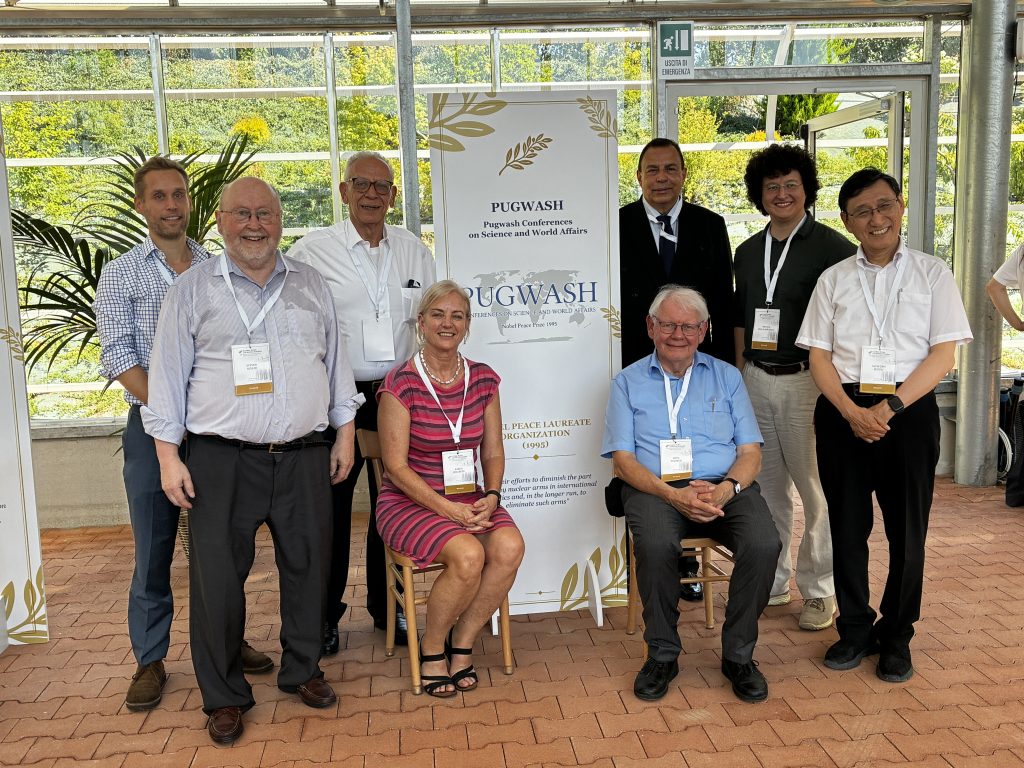
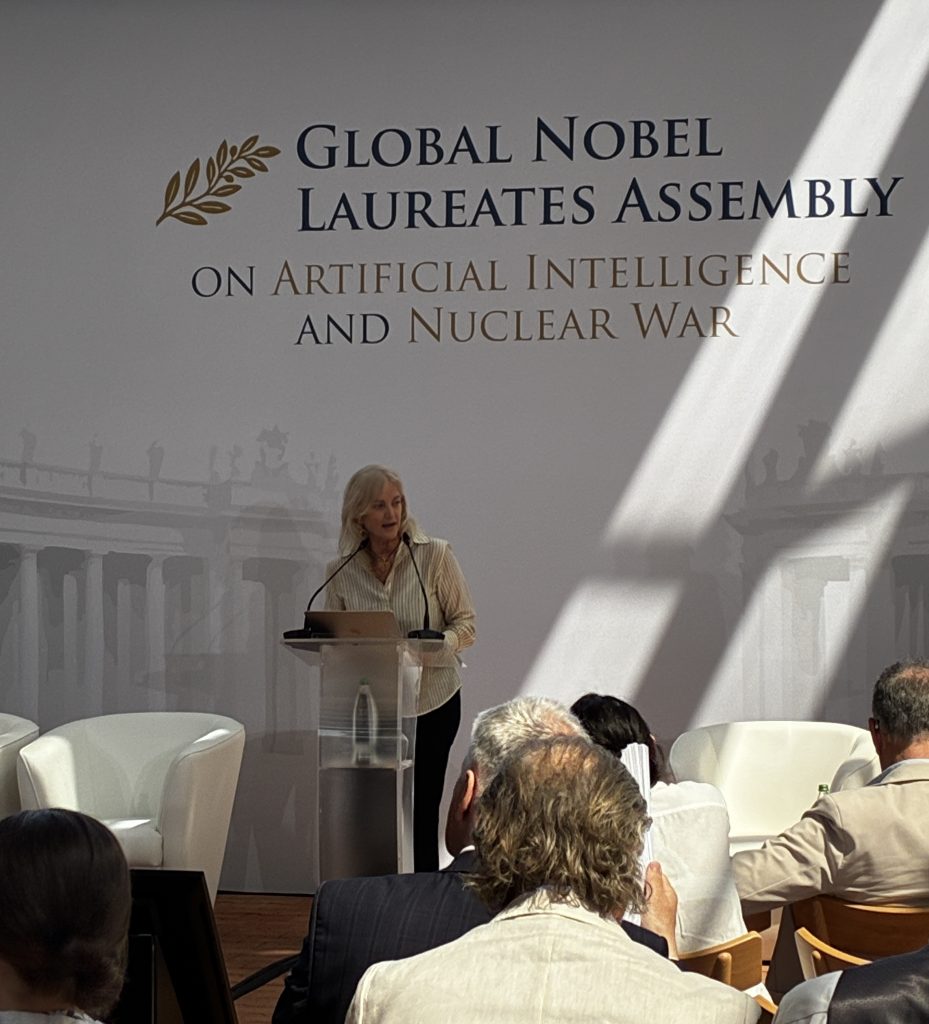
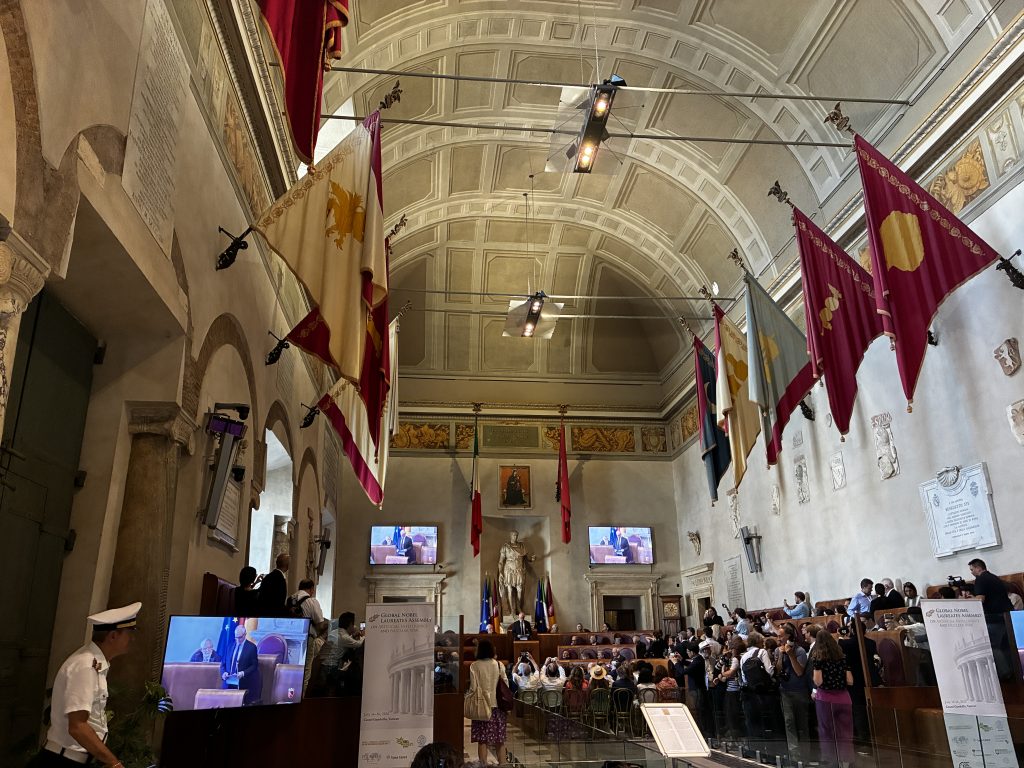
From 14-16 July Pugwash was an organizing partner in an international conference held under the auspices of the Global Nobel Laureates Assembly on AI and Nuclear War, which gathered Nobel Laureates, nuclear policy experts, scientists, AI industry representatives, religious leaders, and AI workers concerned with the current development of AI. The twin purposes of the initiative were to address how artificial intelligence and nuclear weapons create new existential risks, and to create public awareness and momentum toward reducing the dangers that this combination poses to humanity.
Gathered in the Borgo Laudato Si’, part of the Vatican’s Castel Gandolfo grounds, over the first two days expert panels and working groups focused on the fragility of the nuclear order and the rapidly developing AI applications in military systems. Speakers addressed how AI is used in nuclear command and control and the moral challenges of AI‑enabled warfare, including autonomous weapons, and the problems of escalation at “machine speed”. Deliberations centred on both the practical and ethical challenges to ensuring that technological innovation – the opportunities presented by AI – are aligned with ethical norms and can improve global security, including prospects for re-engaging in nuclear arms control. As Pugwash Secretary General Prof. Karen Hallberg noted in her conference keynote on day one, the parallels to the dawn of the nuclear age are stark:
…humanity stands at another historic crossroads with the development of new transformative technologies, in particular of artificial intelligence, which is advancing at extraordinary speed. AI has the potential to improve lives in countless ways, but if left without effective governance, it also has the potential to magnify global risks.
A recurrent theme highlighted the challenges of how meaningful human control can be understood and defined in an era where AI is impacting the integrity of information and reliable communication. In aggregate, AI poses acute questions to nuclear deterrence relationships but equally the nuclear order continues to be fundamentally flawed and liable to disruption and manipulation by emerging technologies such as AI.
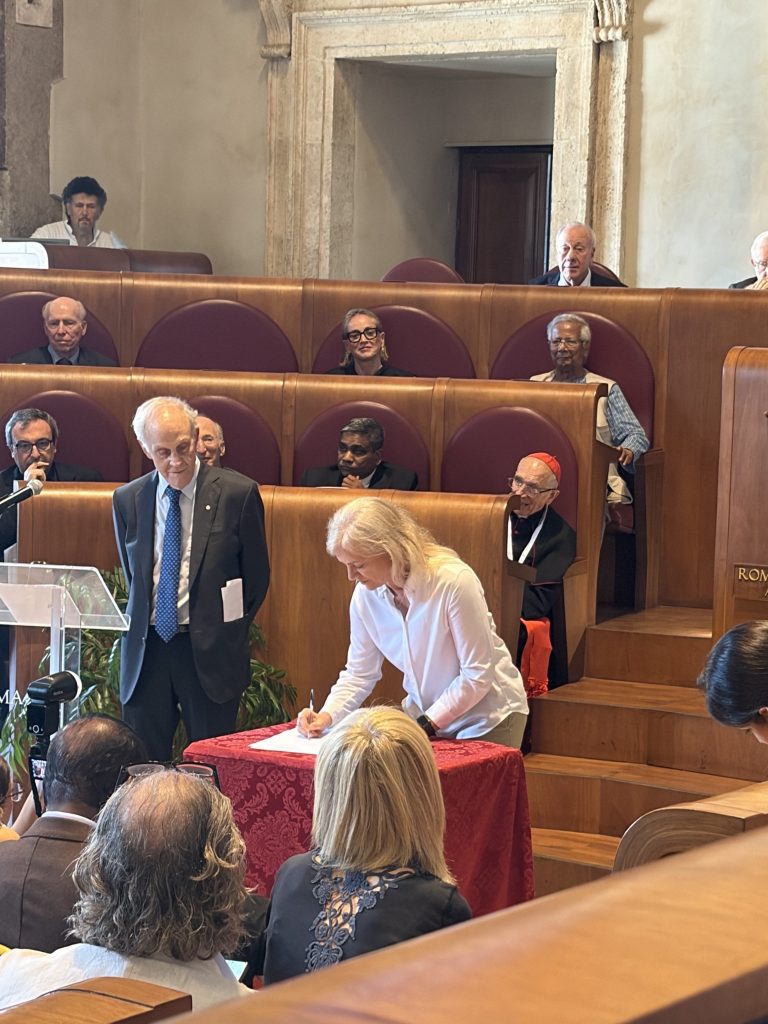
Inspired by Pope Leo XIV’s encyclical “Magnifica humanitas,” multidisciplinary perspectives underscored that this is not just an industry or national challenge but one which requires a coordinated societal and global response. The third day of the Assembly marked the official launch of the Rome Declaration, containing six fundamental principles of the emerging international competition over AI, nuclear weapons and the military domain.
Rome Declaration, Humanity at the Threshold: A Declaration on Artificial Intelligence and Nuclear Weapons
In the midst of a worsening nuclear arms race, we are embarking on an equally dangerous AI race. Pope Leo XIV, invoking values shared across religious traditions, has called humanity toward an “unarmed and disarming peace.” We reject the belief that lasting security can be built on fear, domination, or the permanent threat of mutual destruction. Security cannot rest indefinitely upon the reality of mutual destruction.