
Project Objectives
With much of the arms control architecture dismantled in recent years, there is an urgent need to assess common interests, redefine security priorities, and identify workable approaches to reduce nuclear dangers between NATO and Russia. In particular, the Arctic and Baltic sub-regions have become unformed strategic spaces, creating novel escalation risks. This project will map the impact of NATO membership on the security policy of Nordic states on issues such as Defense Cooperation Agreement (DCA), military readiness for article 5 commitments, and examine prospects for nuclear risk reduction and arms control initiatives.
A New Strategic Environment
The first workshop had two objectives: first, to explore the impact of the NATO expansion in the High North on deterrence and security policies, and second, to discuss prospects for arms control and confidence-building among the Nordic states.
The first day dealt with the shifting world order and its impact on traditional frameworks for cooperation, evident in the absence of serious engagement between the US, NATO and Russia. It was noted that, as small states, a rules-based order and multilateralism are vital for Nordic states to thrive. The workshop proceeded from the basis that serious thinking and dialogue is required to mitigate, and ideally prevent, the implementation of policies and deployments which would increase tension, heighten risks of escalation, and provoke confrontation across the Nordic area.
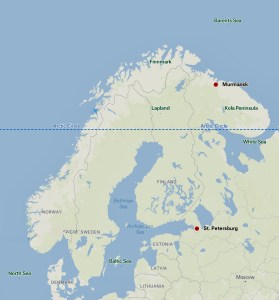
Several key trends have rendered the Nordic region—including both the Arctic and Baltic arenas—as a critical interface between NATO and Russia. The increased threat felt from Russia since the invasion of Ukraine, including of nuclear weapons use, was clearly stated as the  primary driver of NATO accession of Sweden and Finland, in 2023 and 2024 respectively. For both countries, public and parliamentary support for the reversal of long-held policies of non-alignment and neutrality was said to be “remarkable”.
The result is a realigned security environment, with a vastly expanded (1340km Finnish) NATO border with Russia. It was noted that the NATO presence poses a potentially increased threat to Russian strategic military assets in the Kola Peninsula and deployment areas in the Arctic. Moreover, with the assumption that Russian ballistic missile submarines are essential to Moscow’s nuclear retaliatory capability, the High North has become a core theatre which affects vital Russian interests. A further implication of the spread of NATO to the entire Nordic area is that it creates and affects three distinct theatres of operation: the High North/Arctic, the Eastern front (Russo-Finnish border), and the Baltic. These are very different challenges for NATO, require different capabilities, and may not have much overlap in terms of strategy and posture.
Increasingly there was a perception that both sides were more willing to take risks, as tensions in the Baltic and Arctic areas in particular have steadily increased. Russia has persisted in a set of hybrid actions which cause harm below a notional threshold of armed conflict—indeed, one presentation focused on the challenge of when State self-defence can be invoked given the grey-zone activities. Participants understood that both sides have an interest in avoiding inadvertent escalation: the unstable dynamics and lack of engagement point to developing both short- and long-term risk reduction measures.[2] It was observed that, in the context of the Ukraine war, conventional arms control often follows a peace deal, and that a comprehensive package of measures could be developed for consultation in advance, which would accompany a broader political settlement. One participant emphasised that transparency leads to predictability which then breeds confidence – as was seen in the late cold war, this virtuous cycle could be transformed into tangible results before a new phase of arms racing set in.
Presentations noted a broader integration as part of “networked defence cooperation”, particularly in an “unambiguous” external balancing against a perceived Russian threat since the 2014 annexation of the Crimean Peninsula. As noted above, the 2022 invasion of Ukraine provided a “shock” to all Nordic governments and sharpened the thinking on defence needs. Base levels of defence readiness varied among the states, although investment in air defence and naval capabilities was judged to be necessary amid a consensus of “buy buy buy” in defence procurement. In this context, there was debate on whether a Nordic coordination policy —including of pursuing joint spending projects—should be a priority. It was noted that, although the trend is toward a more cohesive and strong Nordic defence capability, such a direction needs to be carefully calibrated so as not to undermine NATO and risk further US retrenchment. It was mentioned that a Nordic or Scandinavian nuclear capability has also been raised in public, but this had not been taken too seriously within the expert community.
Implications for Nordic Security and Disarmament Policies
During the second day of the workshop, participants discussed prospects for risk reduction and nuclear arms control initiatives, and the High North viewed from a wider European security policy perspective. With the entire Nordic region now within NATO, each country must adapt its own set of priorities and policies. On the one hand, the Defence Cooperation Agreements (DCA) that the US signs bilaterally with NATO members will shape the individual direction; on the other hand, states may consider the possibilities of subregional harmonization. While many of the now 47 DCAs remain under development with little public information available—one participant asked, “Where are the threat assessments?”—they will be oriented to provide greater defence readiness with an emphasis on “capability-based deterrence” rather than presence-based. All the same, participants agreed that they would present a potential set of measures that would provoke consternation in Moscow. So a key focus for Nordic countries will be the return of the 1980s debate on “non-offensive defense”, i.e. ensuring both nuclear and conventional deterrence with minimal provocation.
A starting point for the discussion on the prospects for risk reduction, arms control and disarmament initiatives is the fact that the Nordic countries have a long history of successful cooperation – however, security has long been excluded from that collaboration. With all Nordic countries now part of NATO and developing European security alternatives, defence and security cooperation has risen to the top of the agenda. One conclusion of the meeting was that all attention should not be on building stronger defence capabilities but also focus on a policy area that has historically garnered strong public support in the Nordics and cemented the region as a leading international actor in this area of security – namely, nuclear disarmament diplomacy. “Nuclear disarmament” should be understood in a broad and pragmatic sense. While the goal remains the total elimination of all nuclear weapons, the road to realizing this vision is paved with different obstacles defined by the changing circumstances of domestic discourses, geopolitical contexts, technological advancements and many other factors. Therefore, other tools—including non-proliferation and arms control efforts—must be added to the toolbox to allow states to gradually realize the aim of general and total disarmament. It was argued that in the present security situation, for instance, such disarmament efforts can contribute to lowering the nuclear-threat level in the Nordic region by emphasizing risk reduction and de-escalation initiatives related to no-first-use policies. In the discussion it was emphasized that it is important to explore such policy alternatives especially given the current security situation with the US administration paying less interest to NATO.
In this context, it was argued by some of the participants that the Stockholm Initiative for Nuclear Disarmament has formulated a preliminary roadmap that can be used for exploration of more concrete Nordic initiatives. The Stockholm Initiative was established in 2019 with the intention to reduce polarisation between countries and take concrete steps towards the common ultimate goal of a world free of nuclear weapons. The purpose of the initiative was from the beginning to find small steps that would lay a foundation for future disarmament efforts.[3] All Nordic states with the exception of Denmark are members of this 16-state initiative. Moreover, it was withheld that academic institutions, civil society and policy research organizations continue to be indispensable for ensuring well-informed citizens and democratic legitimacy in the nuclear field. University research centres and international organizations such as the AMC and Pugwash could in this respect play an important role for raising the awareness among the public. This is especially important in the Nordic region, where the lessons of the cold war and arms control are quite low, according to one participant.
A second set of questions that was discussed during day two was the impact of the new geostrategic context on the development of security policies of the Nordic countries. Traditionally, several orientations were shared amongst the regional states;[4] equally, some important differences were noted, such as the Norwegian culture since the 1950s to apply restraint and extend reassurances toward Russia. Coordination with NATO by Sweden and Finland was already apparent through the post-Cold War period and into the 2010s.
The statements and actions of the second Trump Administration which have cast questions on the US commitment to European defence became, for obvious reasons, a topic for engaged discussions. One participant noted the irony that Sweden and Finland have ended neutrality to sign up for US security guarantees precisely when they are least reliable. Most obviously, the repeated assertions since 2019 on the US “acquiring” Greenland has left the Danish strategic community “reeling”. The broader current of US disengagement from the continent has provoked internal debate in each Nordic state on spending and procurement plans, as well as on building industrial capacity. It was noted that this latter debate has lacked a public element, in the face of wider austerity measures being pursued by many of the states.
Conclusions: A ‘Landing Zone’ for Regional Stability
Echoing the Report of the Palme Commission on Common Security from the 1980s, participants stressed that “security is not something you can build alone but must build together with the enemy”. Noting that “we have never since been further from the Palme Commission thinking on common security”, one participant proposed that a new form of Commission could be initiated, including members drawn from broad political representation, to study the new security order and propose key measures to reduce misunderstanding and avert a collision course between Russia and NATO. There was consensus that dialogue with the Russians is important and should not be considered as a weakness, as it is often interpreted as in the Nordic region. In fact, not speaking with the Russians could be seen as a weakness, it was mentioned in the discussions.
At the same time, it was widely recognized that if Russia maintains its current orientation, then strategic challenges will persist. As one participant put it, with the Nordic security environment as a relatively “unformed strategic space”, decisions taken now on how to construct it will get locked in for decades. One exercise would be to ask to what decisions taken now might be of serious regret in a five-to-ten-year timeframe?
On this assessment, a key task of the Nordic governments—particularly those of Sweden and Finland as they adapt to NATO membership—is in identifying the “landing zone” for stability in the region which balances deterrence and proactive engagement on arms control and confidence-building. As the new strategic environment in the North takes shape, each state has a responsibility toward determining stable and risk-resilient policies. This would require coordination amongst not only different government departments in each Nordic state but dialogue and discussion between the governments, with expert input.
Participants agreed it will be vital for Pugwash, the AMC, and like-minded institutions to play a role in fostering cooperation between expert communities in the region, as well as work with the governments of the Nordic countries to shape their policies in a constructive way that supports their goals.
Workshop Participant List
- Prof. Thomas Jonter (Sweden), Alva Myrdal Centre for Nuclear Disarmament, Uppsala University Swedish Pugwash
- Dr. Tytti Erastö (Sweden), SIPRI and member of the AMC WG5
- Prof. Laust Schouenborg (Denmark), Roskilde University
- Prof. Peter Wallensteen (Sweden), AMC, Uppsala University chair of the AMC WG2
- Dr. Katariina Simonen (Finland), National Defence University, Finnish Pugwash, Helsinki
- Dr. Sverre Lodgard (Norway), NUPI, Norwegian Pugwash
- Dr. Tapio Juntunen (Finland), Tampere University and AMC WG6 member (online)
- Dr. Emma Rosengren (Sweden), Swedish Institute of Foreign Affairs; AMC WG6 member
- Prof. Lisa Hultman (Sweden), Director of AMC, Uppsala University
- Prof. Götz Neuneck (Germany), chair of Pugwash Council
- Dr. Steven Miller (USA), Kennedy School of Government, Harvard University
- Dr. Poul Erik Christiansen (UK), Pugwash Secretariat
- Ambassador Johanna Strömquist (Sweden), Deputy Director of Department for Disarmament, Non-Proliferation and Export Control, Ministry for Foreign Affairs of Sweden
- Dr. Jens Wirstam (Sweden), Senior Advisor, Department for Disarmament, Non-Proliferation and Export Control, Ministry for Foreign Affairs of Sweden
- Prof. Elisabeth Rachlew, Royal Institute of Technology, Swedish Pugwash
- Prof. Lars Ingelstam, Professor of Technology and Social Change, Swedish Pugwash
[1] Pugwash expresses deep appreciation to Prof. Lisa Hulman, Prof. Peter Wallensteen, Prof. Thomas Jonter and the Alva Myrdal Centre for Nuclear Disarmament for hosting and sponsoring the meeting.
[2] See Erästö and Wan, “Risk reduction is urgently needed amid rising tensions in Northern Europe” SIPRI Commentary (10 December 2025), available at https://www.sipri.org/commentary/essay/2025/risk-reduction-urgently-needed-amid-rising-tensions-northern-europe
[3] See https://www.government.se/government-policy/foreign-and-security-policy/stockholm-initiative-for-nuclear-disarmament/
[4] See Brodén, A., Jonter, T., Rosengren, E., “Nuclear arms control, non-proliferation and disarmament in the Nordic region: Lessons from the past and possible routes ahead” UI Report No. 2 (April 2025) available at https://www.ui.se/butiken/uis-publikationer/ui-report/2025/nuclear-arms-control-non-proliferation-and-disarmament-in-the-nordic-region-lessons-from-the-past-and-possible-routes-ahead/