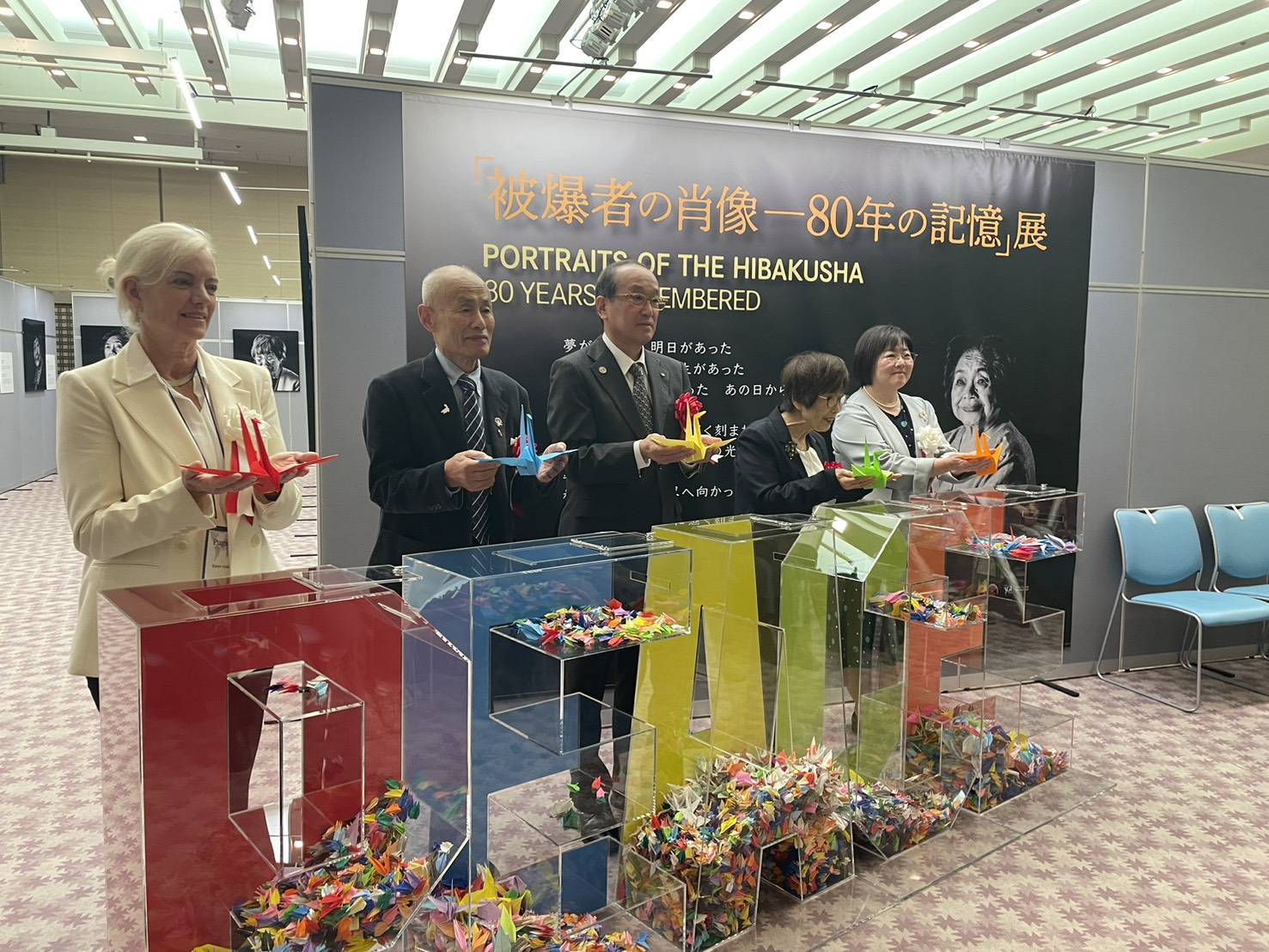
Pugwash officials took part in several events prior and following the 63rd Pugwash Conference in Hiroshima (1-5 November).
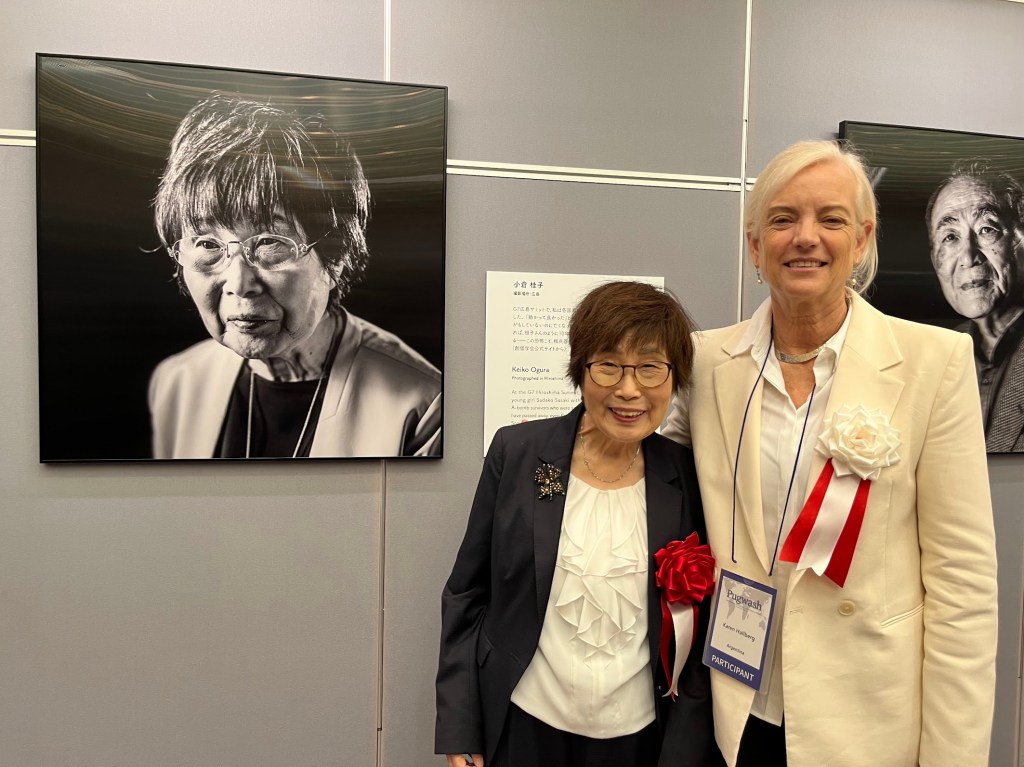
On 31 October, “Portraits of the Hibakusha—80 Years Remembered” had its inaugural showing at the Hiroshima International Conference Center. Featuring evocative black and white lenticular portraits of 52 Hibakusha from Hiroshima and Nagasaki, the exhibition couples each image with personal reflections in Japanese and English. The stark contrasts of light and dark effectively capture the depth of the survivors’ heartfelt emotions and experiences. Prof. Karen Hallberg (Secretary General of Pugwash Conference), Mr. Kazumi Matsui (Mayor of Hiroshima), Ms. Keiko Ogura (Director of Hiroshima Interpreters for Peace), Mr. Toshiyuki Mimaki (Co-chair of Nihon Hidankyo), along with many hibakusha and their families participated at the exhibition official opening, organized by Soka Gakkai International (SGI). The exhibition was created by 80,000 Voices and photographed by Patrick Boyd.

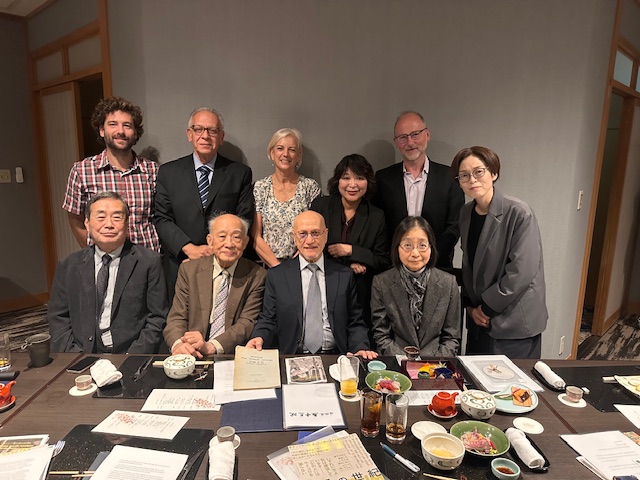
Following the Conference in Hiroshima, several Pugwash members travelled to Tokyo for a series of engagements. First, on 7 November, to the Daigo Fukuryumaru Museum, which hosts the Lucky Dragon No. 5 – a Japanese tuna fishing boat whose crew was accidentally exposed to radioactive fallout from the U.S. Castle Bravo hydrogen bomb test at Bikini Atoll on 1 March 1954. Although the vessel was outside the declared danger zone, the unexpectedly massive explosion produced heavy fallout that rained down on the ship as “white ash.” All 23 crew members suffered acute radiation sickness, and one, radio operator Kuboyama Aikichi, died later that year. The incident triggered widespread outrage in Japan and internationally, reinvigorating the anti-nuclear movement, inspiring cultural works, and revealing the global dangers of atmospheric nuclear testing. As former Pugwash Executive Director Sandra Butcher has documented, the incident led Joseph Rotblat to meet Bertrand Russell on a BBC program about the test and the weapons technology behind it. It led to collaboration between Rotblat and Yasushi Nishiwaki, a Japanese physicist, which made possible a true understanding of the nature of the new weaponry. Concerns about this technology then inspired what became known as the Russell-Einstein Manifesto, published in 1955.
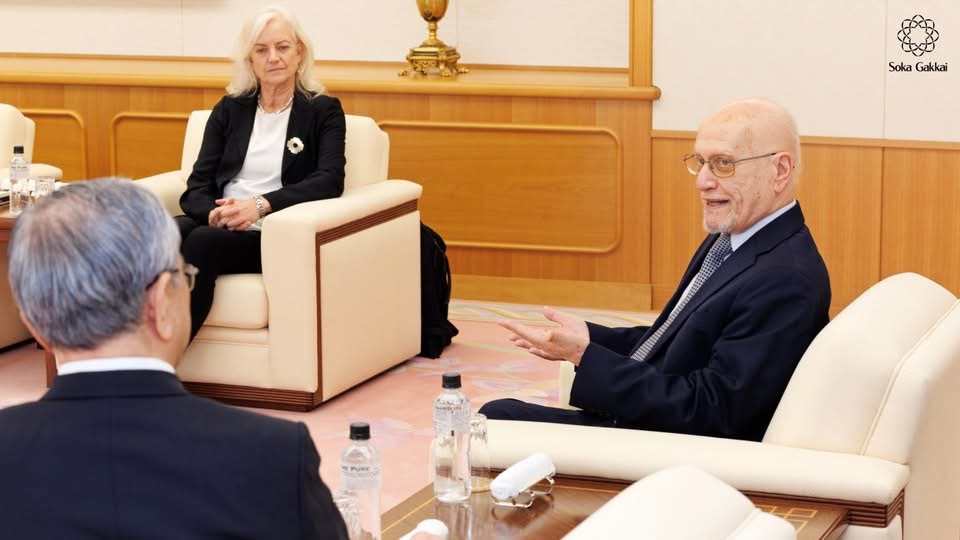
On 7 November , Dr. Hussain Al-Shahristani, President Pugwash, and Secretary General Karen Hallberg visited the Soka Gakkai Headquarters in Tokyo and met with Soka Gakkai President Minoru Harada. Referring to Daisaku Ikeda’s dialogues with Pugwash co-founder Joseph Rotblat and scientist Linus Pauling, Dr. Al-Shahristani emphasized the importance of collaboration between scientists and people of faith to advance the abolition of nuclear weapons. President Al-Shahristani expressed his joy at the exchanges that Daisaku Ikeda has had with the conference founders, Dr. Rotblat and Dr. Pauling, and emphasized that scientists and believers must work together to abolish nuclear weapons and protect the survival of humanity. He recognized that the crisis surrounding the international community is greater than it was during the Cold War, and stressed that there will be no sustainable future if the existence of nuclear weapons and global inequality are left unaddressed.

 Pugwash Conferences on Science and World Affairs